
You Are Here
The End of a Shared Reality Is Just the Beginning
Hello, welcome to 2026. You are here.
We hope you’ve all had a restful break, and wish you the very best year ahead. It is hard to predict what it will bring, for a number of reasons.
One of those reasons is worth focusing on. In the last years somewhere, we’ve crossed a very real line where our reality is no longer the same. This is partly related to how the world is captured and shared, because with AI we can modify images and video of real events in all kinds of ways now. So we don’t all have the version of real events when we experience them through social media anymore.
But the rise of smartglasses and wearables are going to dramatically increase this sense that reality is not the same for you as it is for me, in real time. Our lived experience of the very same location at the same time might potentially be completely different.
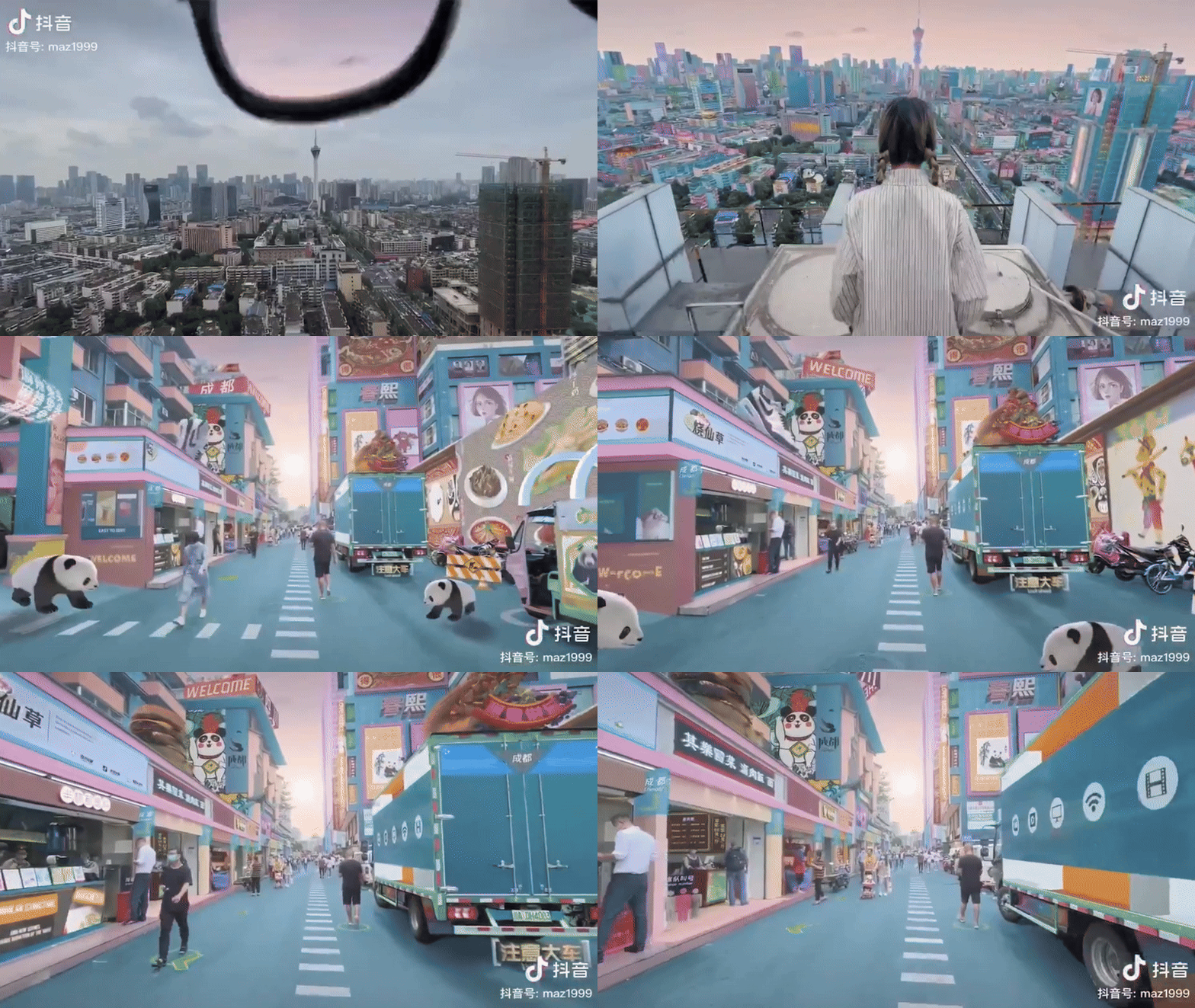
Not long ago, someone walking around talking to themselves or interacting with something invisible would seem odd, and stand out. But it is becoming common to see someone mid-conversation with nobody beside them, and with smartglasses that have an OS we’re interacting with virtual software in addition to voice, and gesture.
The convergence of virtual, augmented and mixed reality is reshaping our understanding of space and distance in profound ways. We're moving away from shared real environments in the same place and time, toward layered virtual ones which collapse distance and fragments what reality represents.
This has profound benefits, of course. Two people in different places on the planet can be together and share an experience as if they are in the same place, most obviously. Spaces become games we can play, hidden navigation can guide you to what you need, all your apps can be revealed in situ.
The same physical corner of a city can simultaneously be a protest site for one person, a shopping opportunity for another, and dance party for a third. The world around you communicates in completely new ways.
It is hard to imagine, but just think of all of us having different Gen-AI filter over the real world. This is not hard to do today and yet already means we’re seeing things profoundly differently. And thats key.
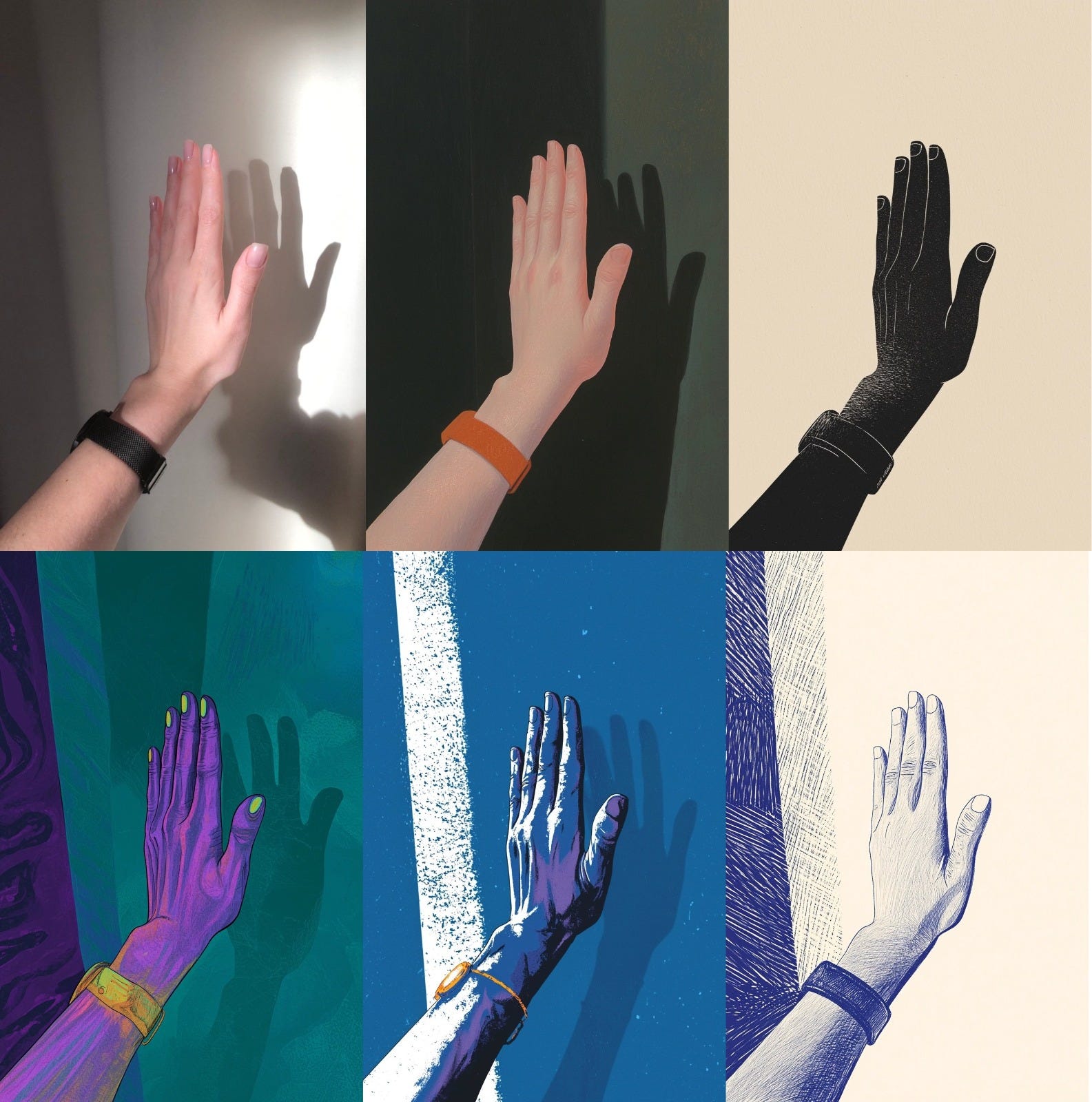
The Map Is Not the Territory
Alfred Korzybski's famous phrase warned us that representations inevitably distort reality. But we're approaching something else now: maps that actively reshape the territory they claim to represent. Companies like Niantic are building spatial intelligence systems that don't just map the world, but determine how machines and humans alike understand and navigate it.
“Our mission is to build a Large Geospatial Model to fuse the physical and digital worlds – transforming how people and machines understand and interact with the real world to improve how we live and work.” - John Hanke, Niantic
The question is whose version of the real world gets encoded into these systems? And what happens when that encoded reality starts influencing our lived experience of physical space?
Fractured Reality
The implications go far beyond aesthetics of course. This new way of experiencing the world demands a new visual grammar and raises profound social questions: who is visible to whom? What objects are shared, and which exist only for you? How do we negotiate presence when every individual's version of the world is different? What happens when someone without access to the overlay enters a space shaped by digital content that they can't see or interpret?
It is interesting to reimagine spaces as having multiple purposes. But at the same time we risk creating not just filter bubbles of information, but filter bubbles of physical reality itself.
This marks a shift from human-computer interaction to human-environment interaction. As that boundary dissolves, we must ask: what are we building, and who benefits? The promise is seductive; personalized, interactive, rich with possibility.
But we should ask not just what these technologies add, but also what they quietly remove... a shared sense of reality for starters? A sense of shared responsibility too?
This is where we are. You are here. But so is everyone else, and they may not be seeing what you see.
We build games and products for wearable devices that feel organic and human. We write about the (un)intended consequences of new technology and the merging of the real and virtual worlds. By Anrick, Grace and Liam.