
Your Brain Doesn’t Care What Shape You Are
Thoughts on homuncular flexibility
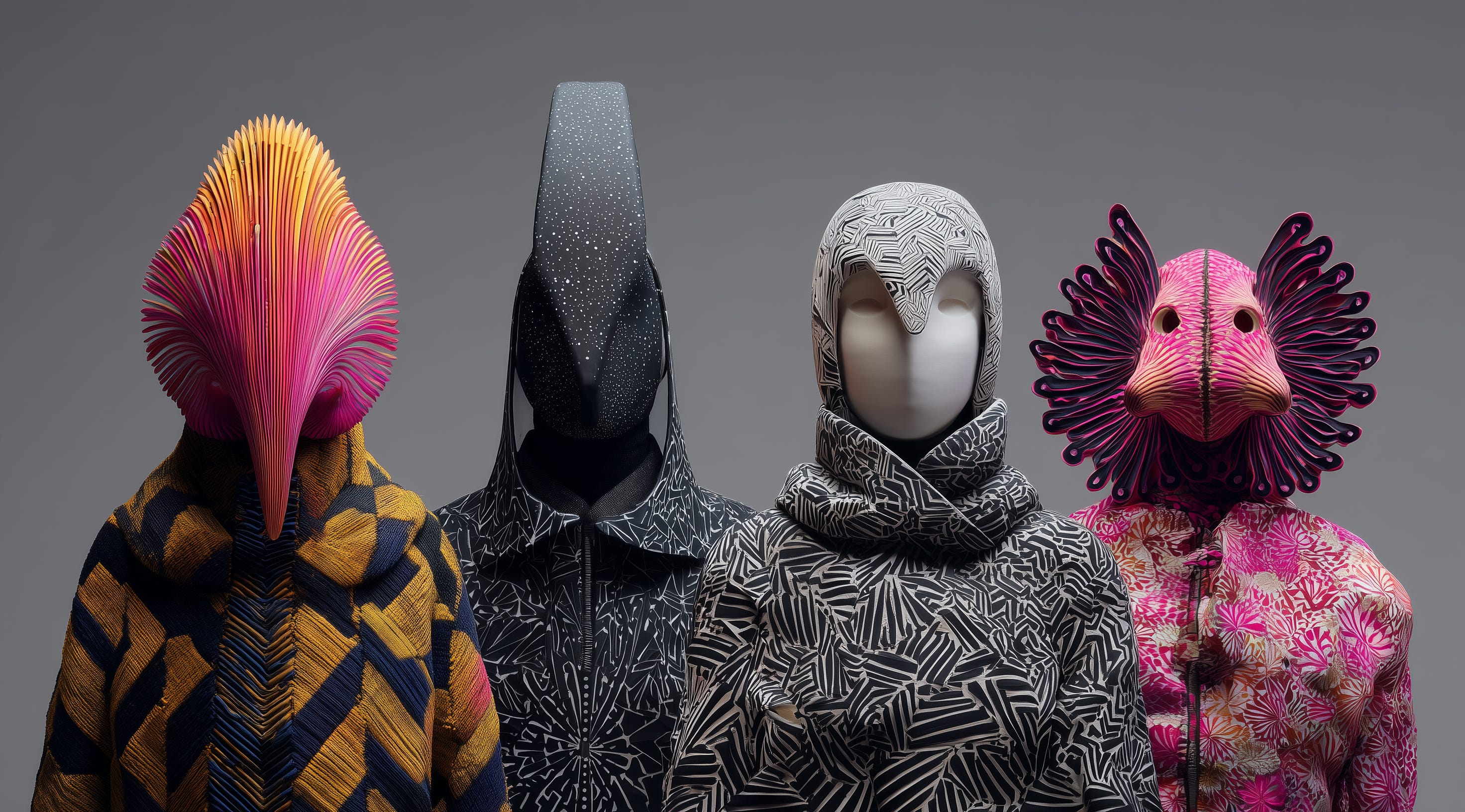
Years ago, I worked on a project for an anti-bullying charity. We made it possible for teens who had experienced being bullied control digital avatars of their adult selves. Working with a child psychologist, we tried to create a way for them to have a conversation: what would you say to yourself as an adult? Being in that older body, talking to their current self created a kind of temporal distance that made it easier to access compassion and perspective.
In the late 1980s, VR pioneer Jaron Lanier did a much more extreme experiment: he gave people virtual lobster bodies. Not lobster claws attached to human torsos, full lobster bodies. And here’s the weird part: people adapted. Quickly.
He called it “homuncular flexibility” this bizarre capacity we have to inhabit forms that have nothing to do with the bodies we’ve lived in our entire lives. Lanier asked: how weird could the body get before the mind would become disoriented?
Decades later, the rubber hand illusion showed us that with just some synchronized tapping and stroking, your brain will genuinely believe a rubber hand on a table is your hand. Your brain shifts where it thinks your hand actually is. When someone threatens the rubber hand, your stress response fires up like it’s protecting real flesh.
When researchers put adults in virtual child bodies (with full motion tracking so the body moved exactly as they did), the adults didn’t just feel smaller. They perceived objects as genuinely larger. Their implicit associations shifted toward child-like categories. The form changed how they experienced reality itself.
VR researcher Mel Slater demonstrated that men could experience full body transfer into female virtual bodies, measuring the illusion both subjectively and physiologically through heart-rate changes when the virtual body was threatened. As he put it: “Virtual reality has the power to transform our sensation not only of where we are but also of who we are.”
What I find interesting about this is how little our brains care about our physical body. I am not saying it’s irrelevant but that we’re more flexible than we might think. We spend our whole lives in one body, building an identity around it, and yet, given the right sensory feedback, we’ll accept a lobster, a child, a gorilla, or anything else really.
“…when the brain generates an illusion of body ownership and agency over a virtual body then a correlate of this is that it also generates attitudes and behaviors that are concomitant with that type of body.”
— Slater, Sanchez-Vives
You can see this playing out at scale now on platforms like Fortnite, Roblox, and others, where people spend hours embodied as anime characters, anthropomorphic animals, abstract geometries, even household objects. Avatars aren’t just cosmetic but the way people explore aspects of themselves that don’t fit in their physical lives.
We’re spending more of our lives in spaces where our physical form is just... optional. Work meetings where you’re a floating head. Social hangouts where you’re a dragon. Gaming sessions where your body is a legless gorilla.
And we’ve been customizing our outer selves everywhere already: filters on social media, upgraded skins in Fortnite, carefully curated Instagram grids. Now with AI, we can present alternative versions of ourselves to the whole world. Voice clones. AI-generated photos. Chatbots trained on our writing.
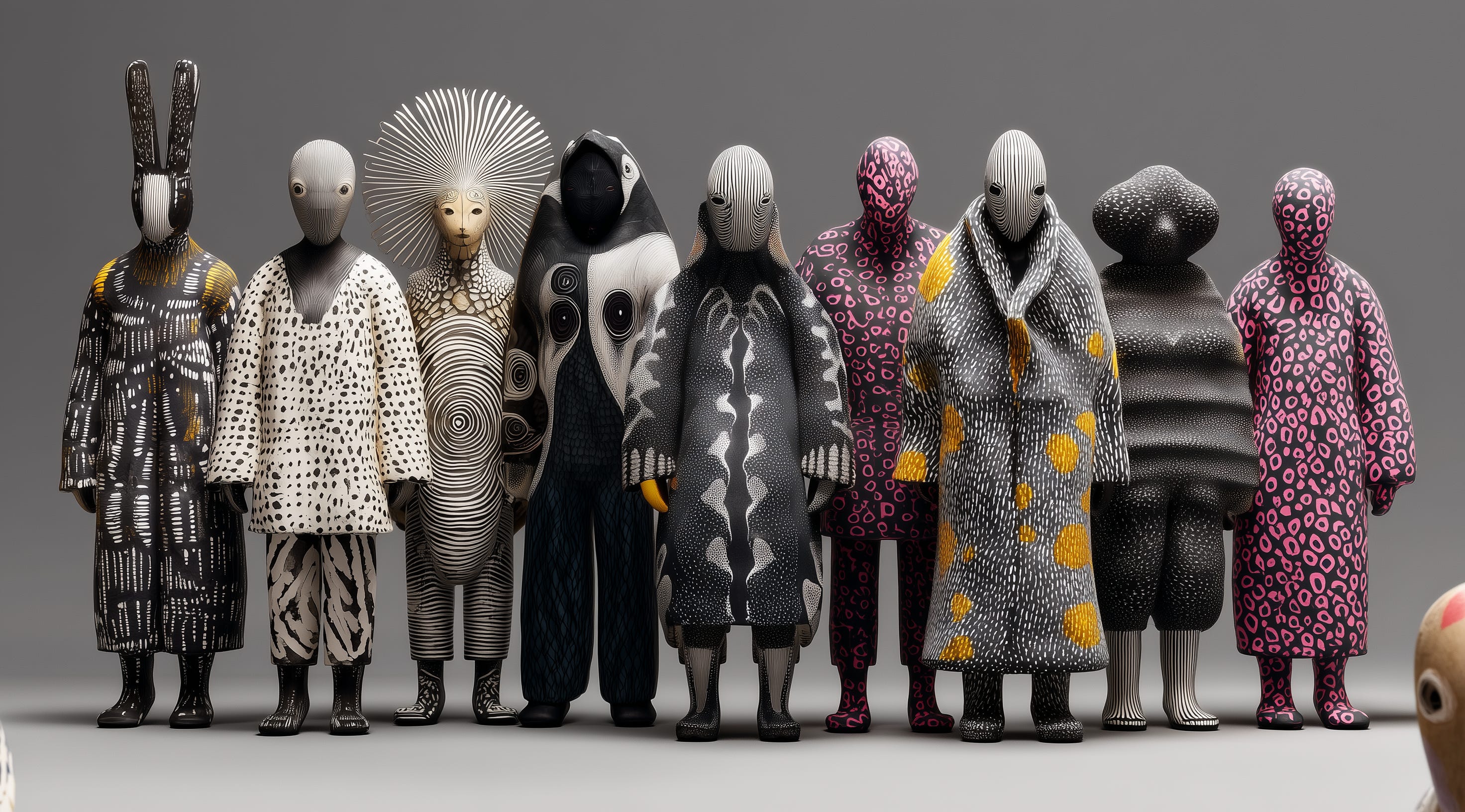
To be honest, none of this is new. Humans have been experimenting with the human shape for millennia. Ancient Egypt had Anubis, the jackal-headed god. Hindu deities like Ganesha, the elephant-headed god of beginnings. The Yoruba orisha traditions carried through African and Afro-Caribbean cultures. The Selknam people at the southern tip of South America in Tierra del Fuego, with their elaborate body painting and ceremonial transformations. World history is full of indigenous symbolism and spirits.
I would argue these were expressions of homuncular flexibility. The capacity to imagine ourselves in other forms, and the adaptability of the brain when inhabiting a non-human body. Perhaps what is surprising is just how little of this continues to be a part of our lives today. Our modern world is very plain indeed, maybe that’s partly why new technologies are needed; to reactivate our imagination.
Maybe the question isn’t ‘what does it mean to be human when we can embody anything?’ Maybe it’s simpler: we’re learning that being human was always less about the specific meat-shape we’re in than we thought.
References
Transcending the Self in Immersive Virtual Reality
Human Tails: Ownership and Control of Extended Humanoid Avatars